 VSOG
Give every ship a way through.
Protect the formation, communicate threats, and coordinate with the crews depending on your cover.
Fly with purpose. Bring a crew together. Become someone others can count on. VSOG brings pilots, crews, and specialists together for coordinated operations, with room to develop your skills and a role in what we build next.

Make coordinated operations possible with people whose capabilities complement your own.
Learn alongside other pilots and crews. Share what you know, and practice what comes next.
A timely repair, a clear report, a sound decision. Your contribution can change the outcome.
A convoy gets home because its people work together. Explore a role in the formation.


Protect the formation, communicate threats, and coordinate with the crews depending on your cover.
Learn your station, communicate clearly, and help the whole crew work as one.
Find, confirm, and share the information the force needs before it commits.
Coordinate the approach, recover equipment, and help extract people when the situation changes.
Tactical Aviation Group (TAG) · Tactical Logistics Group (TLG)
Work with other pilots and crews to protect transports and support ships along the route.
Maintain shared awareness, communicate threats, and keep the ships under your protection at the center of the plan.
Find and verify contacts, routes, and hazards before the formation commits.
Share what is known, flag what is uncertain, and keep the plan connected to changing conditions.
Combine individual flying skills with coordinated tactics, clear communications, and mutual support.
VSOG supports purposeful PvP. Personal harassment and targeting people solely to ruin their experience are incompatible with membership.
Develop flying and communication skills alongside others, then put those skills to work as part of a flight.
New players willing to learn and experienced players willing to teach both have a part to play.
Work aboard multi-crew vessels, gunships, and capital ships, where preparation and coordination turn individual stations into a capable crew.
Owning a ship does not confer authority over its crew. A ship commander is appointed for the operation.
Move people, cargo, and supplies where the operation needs them. Help keep the force prepared for what comes next.
A successful delivery gives every other role more room to operate. Logistics is part of the mission, not an afterthought.
Coordinate the recovery of equipment and the extraction of people when the situation changes.
Work across aviation, ship crews, and support roles to turn a safe approach into a successful recovery.
Coordinate the stopping, seizure, or denial of assets under contract. Assess the objective and the information behind it before committing the force.
VSOG retains the right to refuse, question, or stop the work. A client may purchase our services, not our judgment.
One force, connected capabilities. The Tactical Aviation Group (TAG) and Tactical Logistics Group (TLG) bring complementary skills to the same operation. Pilots, crews, and support specialists plan and work together.
Bring the skills you have. Develop the ones you want to carry into the next operation. Find a way to contribute that fits your commitment.
Bring the skills you have. Develop the ones you want to carry into the next operation. Membership describes your relationship to VSOG; qualifications recognize your skills, and appointments define your responsibilities.
VSOG does not use permanent military ranks. Founder and Command Council are governance responsibilities, not military grades.
Capability has a voice here.
“Rank does not prove skill.” Qualification does not automatically grant command, and owning a ship does not confer authority over its crew.VSOG Charter
VSOG-created lore. Not official CIG canon.
The escorts stayed to help repair the ships they had brought through. When the next contract arrived, the client asked for the same team. VSOG began with people who discovered they could achieve more together than apart.
A SHARED DIRECTIONDifferent backgrounds. Different skills. The beginning of something none of them could build alone.

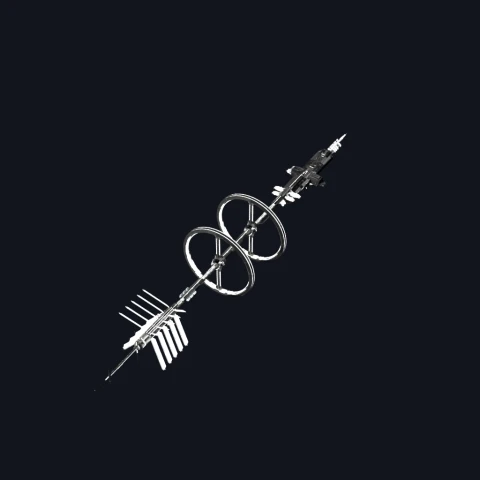
The Abolition of the BraidA chapter of VSOG’s fictional history. The dialogue belongs to the story, not a player testimonial.
“Nobody's uniform stops a mass driver round.”Sera Pell · The Abolition of the Braid · VSOG lore
“He wanted his work to matter when it was relevant.”Narration · The Abolition of the Braid · VSOG lore
The salvage pilot warned of debris the prepared route did not show. His warning was dismissed. When the transport was damaged, he guided it to safety. The debrief forced VSOG to confront the difference between seniority and expertise.
We choose the work. We answer for it.
Keelglass · VSOG-created loreAchieving an objective did not erase its consequences. Keelglass became a lesson in verifying the information behind an order.
The convoy survived a dangerous passage between Hurston and Crusader. Its ships arrived battered, their crews exhausted, and its escorts facing a larger repair bill than anyone had expected.
The operators came from different backgrounds: former UEE military personnel, independent pilots, haulers, engineers, and other specialists. They had come together to complete a contract.
At the destination, the escort crews stayed to help make the damaged vessels spaceworthy. They settled the maintenance costs, divided what remained of the payment, and expected to go their separate ways.
Then another contract arrived. The client wanted the same team.
VSOG began with that discovery: they worked better together than apart. As the contracts grew more complex, they needed a way to coordinate without losing what had made the partnership work.
An equipment retrieval became an extraction from a failing installation. Escort pilots secured the approach while engineers, boarding personnel, and supporting crews brought survivors and equipment aboard. The recovery cost equipment and led to a commercial dispute. Those who stayed learned what different specialists could achieve when trusted to exercise judgment within their responsibilities.
The planning information for an interdiction did not accurately describe everyone traveling with the target shipment. A fleeing service vessel was disabled, and workers aboard were injured. The objective was achieved, but VSOG recorded the operation as a failure of judgment. A successful contract could not erase its consequences; verification and accountability had to remain part of the work.
Near Hurston's L3 Lagrange point, a civilian salvage pilot identified debris missing from the prepared route. He warned twice, but the mission leader declined the deviation. After the lead transport struck the debris, the leader entrusted the immediate route to the specialist. The salvage pilot guided the damaged ship out while escorts restored the screen and support crews prepared to assist.
VSOG's decision not to use permanent military ranks is established policy. This account describes how the organization came to distinguish qualifications, appointments, and membership. Qualifications recognize ability; appointments assign responsibility; membership describes commitment.
The Assembly carried the distinction into VSOG’s continuing development: membership describes commitment, qualifications describe capability, and billets describe responsibility. Members needed opportunities to learn and contribute, while real life continued to come first.
These are summaries and excerpts of VSOG-created lore, not records of completed player operations. Dates before the Vector Assembly are intentionally unspecified.

Start with a conversation. Meet the people behind VSOG, ask about the roles that interest you, and find out how to get involved. Bring your experience, your curiosity, and what you hope to build with others.